Playbook 05 Trade-In, Resale & Marketplaces · 7 min read · Clienteling · Vintage Resellers · Marketplaces
Running In-Store Trade-Ins and Pre-Listing Checks with Shareable Proof
How boutiques, vintage resellers, and marketplaces verify second-hand pieces before issuing credit or publishing a listing—and prepare for EU ESPR traceability.

01 · In-store trade-ins & EU circularity rules
Empowering boutique advisors to check a piece before issuing credit
More brands and specialty retailers are launching trade-in and second-hand corners in store—driven both by resale demand [2] and by the European Union’s Ecodesign for Sustainable Products Regulation (ESPR, Regulation 2024/1781), which bans the destruction of unsold apparel and footwear for large enterprises from 2026 and introduces the Digital Product Passport (DPP) for textiles in 2027 [1]. Yet a store advisor cannot be an expert on ten years of production variations across thirty models. Without a tool at the counter, the store either refuses the trade-in until a central hub inspects the piece weeks later, or takes the financial risk of issuing a voucher on the spot.
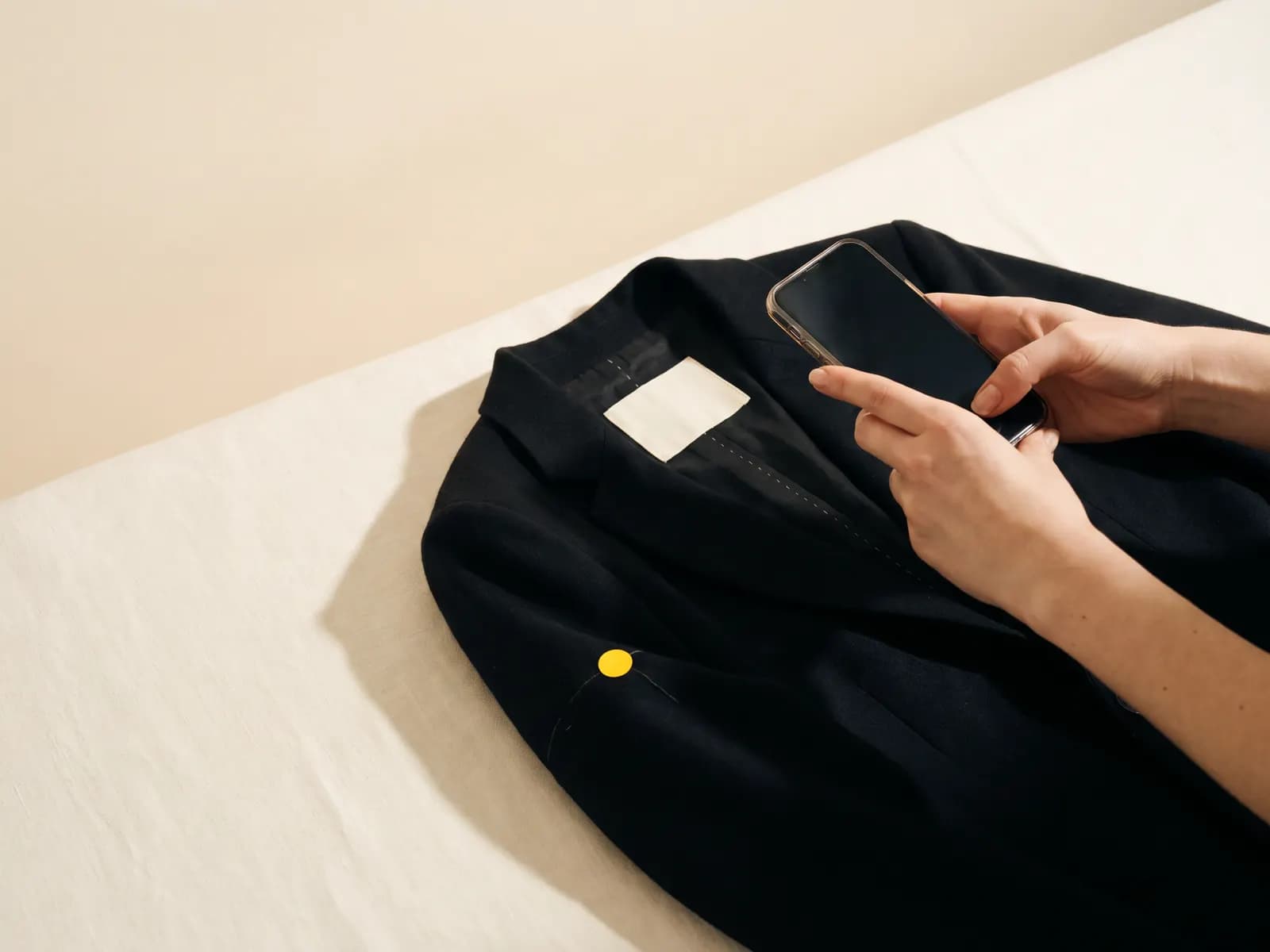
With LegitV, the advisor runs the check with the client right at the counter. They select the model, take the guided photos, and get the verdict in minutes—along with an estimated era when the model’s serial or label format supports it.
- Before the voucher is issuedClear pieces are accepted immediately in store; doubtful pieces are flagged for expert review before any store credit leaves.
- Built for vintage and worn itemsAge wear on a heat stamp or a missing box is marked Not seen rather than failed, so honest vintage pieces aren’t wrongly rejected while pre-DPP archival items gain a verified digital record.
02 · Marketplace & reseller screening
Screen listings via API and share the report with buyers
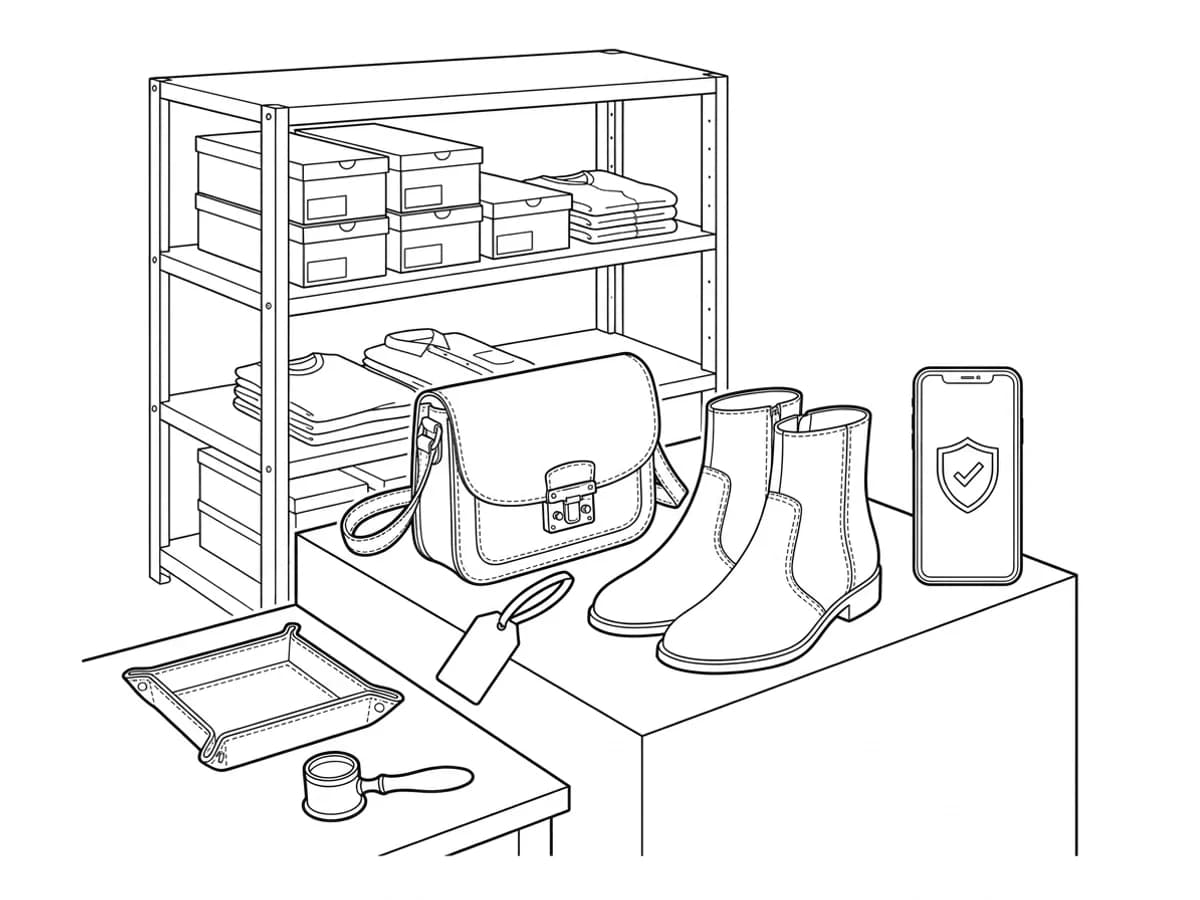
For marketplaces and professional resellers, LegitV plugs directly into the listing flow via API or web app. Sellers or cataloguers submit the item photos (or a listing link); clear listings go live, clear fakes are held, and borderline listings are routed to your authenticators with every point already laid out.
Once a piece is checked, you can share the report link with your buyer. Instead of a vague badge, the buyer sees the exact points that were checked on that item and why it passed.
01 · Web app for your store and warehouse teams. 02 · In-store service with your clients. 03 · REST API inside your marketplace listing flow.
OPERATIONAL COMPARISON
Centralized hub-only vs. LegitV at the counter and in the listing flow
| Channel | Centralized hub only | With LegitV |
|---|---|---|
| In-store trade-in | Ship to hub, client waits days for voucher | Checked at the counter in minutes |
| Marketplace listing | Manual review bottleneck or unscreened post | API pre-check routes only doubtful items to experts |
| Vintage piece with worn stamp | Often rejected by rigid rules | Worn point marked Not seen; judged on visible points |
| Buyer proof | Generic 'verified' badge | Shareable report with every point explained |
FREQUENTLY ASKED QUESTIONS
Operational questions on trade-in & resale checks
Can individual buyers and sellers use the same engine?
Yes. On /personal, anyone buying or selling on Vinted, Vestiaire Collective, or eBay can run the exact same model checklists on a pay-per-check basis.
What if a marketplace listing doesn’t have enough photos?
The report marks the missing points as Not seen and tells the buyer or moderator exactly which photo to ask the seller for before paying or approving the listing.
BIBLIOGRAPHY · PRIMARY STUDIES & REFERENCES
Research papers, regulations and industry benchmarks
- [1]Regulation (EU) 2024/1781 — Ecodesign for Sustainable Products Regulation (ESPR) & Digital Product Passport
European Parliament & Council of the European Union (2024) · Official Journal of the European Union, L 2024/1781 · Primary source ↗
Establishes the EU Digital Product Passport (DPP) framework (registry in 2026, textile delegated acts in 2027) and bans the destruction of unsold consumer apparel and footwear.
- [2]Luxury Goods Worldwide Market Study: Secondhand & Circular Luxury Growth
Bain & Company & Fondazione Altagamma (2024–2025) · Bain Luxury Report · Primary source ↗
Tracks the structural rise of secondhand luxury and brand-operated trade-in programmes as primary client acquisition and retention channels.